
Famco Chimney Sweep in Central Park: A Homeowner’s Guide
Most homeowners don’t know which brand of cap, flashing, or draft hood is on their chimney, and that gap matters the moment something fails and a technician needs to source a compatible replacement. In Central Park, where wood-burning fireplaces see real use through cold snaps and shoulder-season evenings, the brand on your venting hardware tells a technician what to expect long before the tools come out. This guide is about Famco components specifically: where they show up on a residential system, what a sweep needs to check on them, and what happens when they wear out. If you’d rather have a trained set of eyes confirm what’s actually up there, call (855) 550-7509.
Key Takeaways
- Famco makes chimney system hardware like venting components, termination caps, range hoods, and draft inducers, not full chimney liners or masonry materials.
- The brand on your cap or draft inducer affects replacement options when it fails.
- Venting specs interact directly with flue liner sizing, and a mismatch can cause draft problems.
- Identifying Famco parts is usually a matter of reading markings and checking installation patterns during a standard sweep and inspection.
What Does Famco Actually Make for a Residential Chimney?
Famco manufactures specific chimney system components: venting hardware, termination caps, range hoods, and draft-related products such as draft inducers. That’s the short answer. It doesn’t make full stainless chimney liners, and it doesn’t make crown mortar or resurfacing compounds. Knowing what a manufacturer does and doesn’t produce saves a homeowner from chasing the wrong part when something at the top of the flue goes bad.
Here’s the practical breakdown of what typically sits on or near a Central Park chimney that could carry a Famco label:
- Termination caps at the top of a flue, the component that keeps rain, snow, and animals out while allowing exhaust to escape.
- Venting components used in certain appliance and fireplace venting configurations.
- Draft inducers that help move exhaust up a flue when natural draft is marginal.
- Range hood components, which fall outside the chimney itself but share the venting ecosystem in many homes.
If you’re in Central Park and your cap looks like it’s been up there a while, that’s normal. The point isn’t to replace it for the sake of it. The point is to know what’s installed so a replacement, when it’s actually needed, is properly matched. From the firebox floor to the chimney cap, we handle the whole system, and part of that is knowing which hardware is bolted to it.
Why Do Famco Venting Specs Matter for Liner Sizing?
Venting specs interact directly with chimney liner sizing, and a mismatched component can cause draft failure even when everything looks fine from the ground. This is the piece most homeowners miss. A draft inducer sized for one appliance configuration won’t perform the same on a system built around a different flue volume. A termination cap that restricts flow, or one that was added to solve a problem the flue didn’t actually have, can push smoke back into the room.
Draft failure shows up in a few predictable ways:
- Smoke curling back into the room when the fireplace is lit.
- A fire that struggles to establish or keeps dying down.
- A persistent creosote or smoky smell even when the fireplace is off.
- Uneven performance, where the fireplace works on some days and not others.
Before assuming the flue is undersized, a technician should check whether the components are matched to the appliance and the liner. That check starts with identifying the brand and spec of what’s installed. In our experience, a fair number of “the chimney doesn’t draw” calls in Central Park turn out to be a cap or vent component mismatch rather than a liner problem. DuraFlex liner systems and components are sized to work with specific appliance outputs, and when a Famco cap or inducer is part of the picture, the two need to agree. If you’re not sure what’s up there, that’s exactly what a documented chimney inspection is for.
What Should a Sweep Check on Famco Caps and Draft Controls?
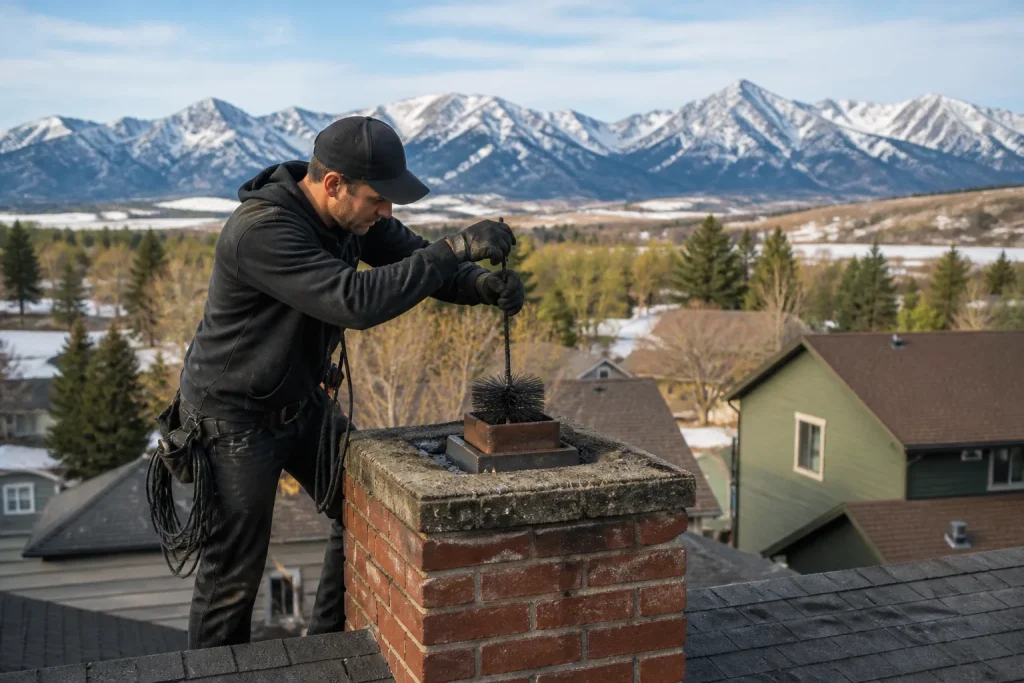
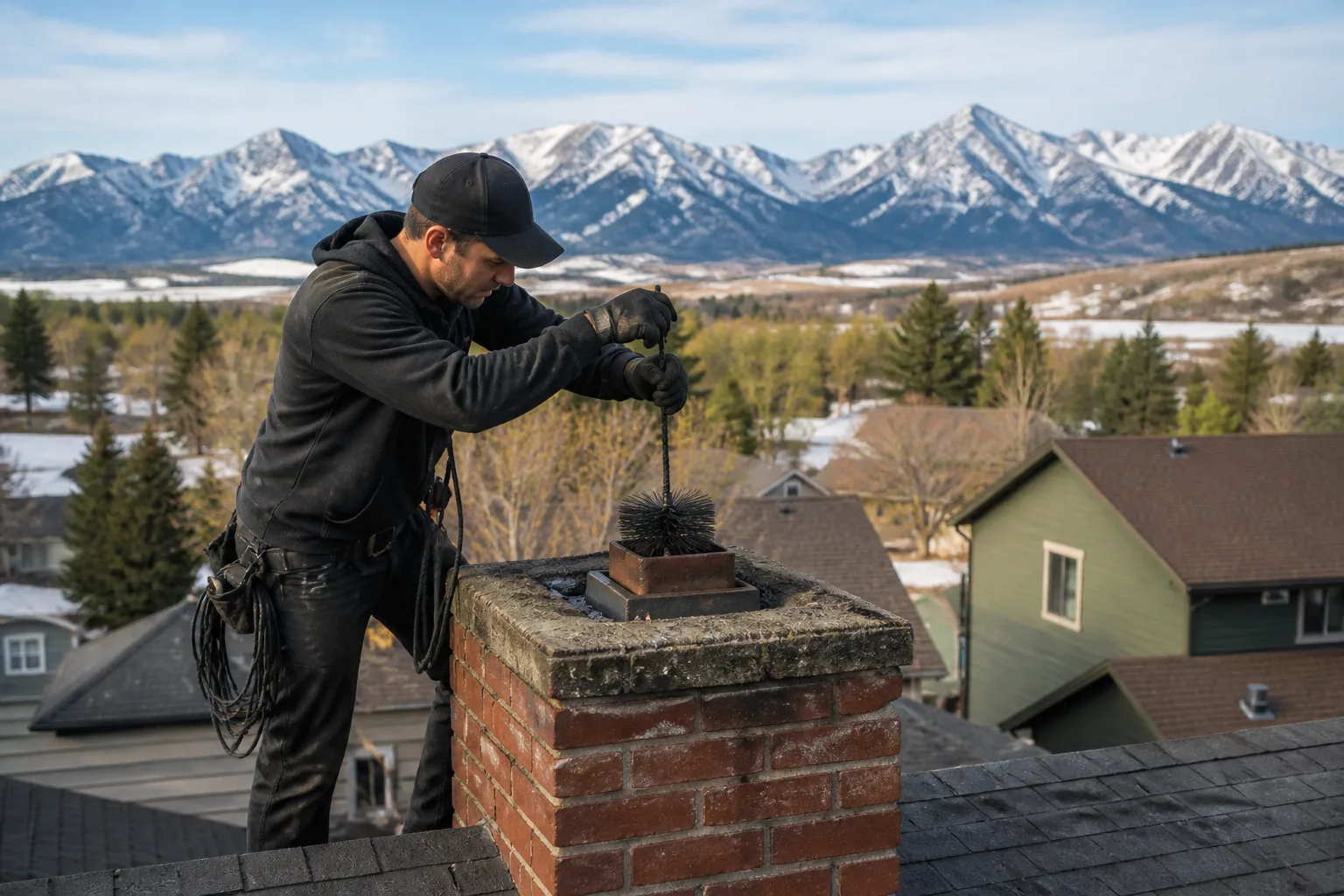
A sweep should check three things on any Famco cap or draft-control component: physical condition, secure attachment, and airflow clearance. During a standard chimney sweep, the technician is already up on the roof and inside the flue, so this is the natural moment to look over the hardware and note what’s there.
- Cap condition. Look for rust-through, cracked or missing fasteners, bent louvers, or a cap that’s shifted off-center. A loose cap lets in water and wildlife.
- Attachment and seal. Check that flashing and connections are tight and that the cap sits the way it was installed, not tilted or partially detached.
- Airflow. Confirm the cap isn’t obstructing the flue beyond what the design intends, and that debris or a bird’s nest hasn’t blocked the opening.
- Draft-control components. If a draft inducer is present, verify it’s operational and that its inlet and outlet aren’t clogged with soot or debris.
- Markings. Record the brand and any visible model information so future service doesn’t have to guess.
Ask us what we found. We document every inspection so you have a record of what’s on your chimney and what condition it’s in. In Central Park, freeze-thaw cycles take a toll on fasteners and seals, and a cap that survived last winter may not be sealed this one.
How Do You Identify Famco Parts During an Inspection?
Identifying Famco parts comes down to three clues: cast or stamped markings, component shape, and installation pattern. During a visual inspection, a trained technician reads the casting or label, notes the overall form of the cap or draft component, and checks how it was mounted. Famco termination caps have a recognizable profile, and the fastening pattern often matches the original installation rather than a retrofit.
What makes this harder for a homeowner doing a quick look is that most of the identifying marks are small or partially obscured by soot and weather. A photo from the roof isn’t always readable. That’s why we photograph and document the hardware during an inspection and keep that record for the next visit.
Why it matters: when a Famco component fails and needs replacement, the technician needs to confirm what’s there so the new part fits the flue size and the appliance. A cap that’s “close enough” often isn’t. Matching the wrong termination cap to a flue can choke the draft or leave gaps that let water in, and neither problem shows up until the fireplace is in use. Here’s what we bring to a fireplace repair when a venting issue is part of the diagnosis.
What Happens When You Replace a Famco Component?
Replacing a Famco component is usually a matter of matching the existing flue and appliance specs to a current-production equivalent, not simply ordering the original part number. Famco product lines evolve, and an exact match for an older cap or draft inducer may no longer be in production. The technician’s job is to confirm the flue size, appliance output, and venting configuration, then select a replacement that preserves the system’s performance.
Here’s how that tends to go:
- Identify what’s installed. Confirm the brand, model, or same-class equivalent from markings and photos.
- Check the flue and appliance specs. Confirm liner size and appliance rating so the replacement supports the same venting profile.
- Select a compatible component. Famco equivalents, or current-production configurations from other recognized venting lines, are matched to those specs.
- Install and seal. Fasteners and flashing are replaced and sealed so the cap or draft component sits correctly.
Cap and crown components come from manufacturers like Gelco and Famco that build dedicated chimney weatherproofing hardware, not general-purpose parts. That matters in Central Park, where a properly seated cap is what keeps meltwater and late snowmelt from working into the crown and masonry. We install and repair with a vetted portfolio of brands, including DuraFlex, HeatShield, Gelco, Olympia Chimney, Famco, and Copperfield, and that range lets us match the replacement to your system rather than the other way around. If a crown is wearing alongside the cap, that’s the moment to address the chimney cap & crown together.
When to Call a Pro About Your Famco System
Call a pro when you see smoke backing into the room, when a cap is visibly loose or missing pieces, when you smell creosote or smoke when the fireplace is off, or when you can’t confirm what brand of hardware is on the chimney at all. Those are the signals that a professional look is worth the call. Our technicians have up to 15 years of experience reading venting setups, and a cap or draft component is usually quick to identify once someone is on the roof.
Related services in Central Park:
- Chimney Sweep Central Park
- Chimney sweeping and inspection
- Fireplace repair
- Chimney cap and crown installation
We also handle HeatShield flue resurfacing for systems where the liner needs restoration, and standalone chimney inspections when a homeowner needs a documented assessment before buying, burning, or repairing. A clean chimney is the starting point; a safe, structurally sound chimney is the goal.
The Bottom Line
Famco parts are a real part of many Central Park chimney systems, usually in the form of a termination cap, venting component, or draft inducer. Knowing what’s installed and how it interacts with your flue size saves money and headaches when something wears out. A sweep that checks the hardware, not just the flue interior, gives you the documented record you need for the next replacement. If you’re in Central Park and need help identifying or servicing your chimney system, Chimney Sweep Central Park offers free estimates. Call (855) 550-7509. We answer 24/7. Fast dispatch from 7am to 7pm, Sunday through Friday.
Frequently Asked Questions
No. Famco makes chimney system hardware such as termination caps, venting components, range hoods, and draft inducers. Full stainless liners come from manufacturers like DuraFlex. When your system needs a liner, the work is matched to your flue and appliance specs, not to the brand on your cap.
You can, provided the replacement matches the flue size and venting profile. The concern isn’t the brand name; it’s whether the new cap allows the same airflow and seals the same way. A mismatched cap can cause draft problems, so the replacement should be sized to your system. Call (855) 550-7509 for an exact quote; estimates are free.
Check for cast or stamped markings on the cap or draft component, look at the component shape, and note the fastening pattern. Most markings are partially obscured, so a technician often reads them during a standard sweep and documents them for you. That record is what makes future service easier.
Water, snow, and animals get in. In Central Park’s freeze-thaw cycles, a missing or loose cap lets meltwater reach the crown and masonry, and over time that leads to cracking and interior damage. Smoke and draft performance can also suffer. A loose cap is a small fix that prevents a larger repair. Call (855) 550-7509 to schedule a look; estimates are free.
Written by the team at Chimney Sweep Central Park.
Need Chimney Cleaning Help?
Call Chimney Sweep Central Park - the local pro we connect you with is licensed and insured, with free written estimates in Central Park.
(855) 550-7509