
Last updated November 24, 2026
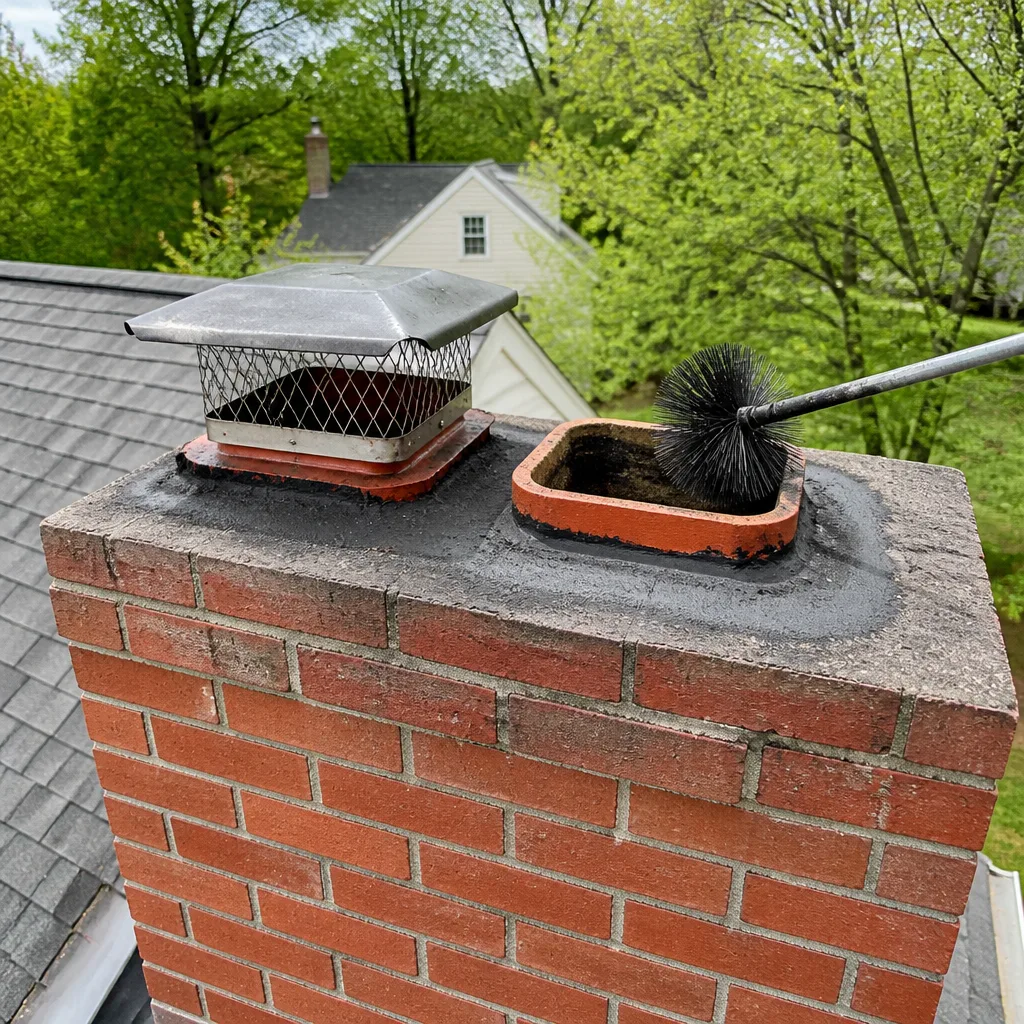 Sweep & inspection
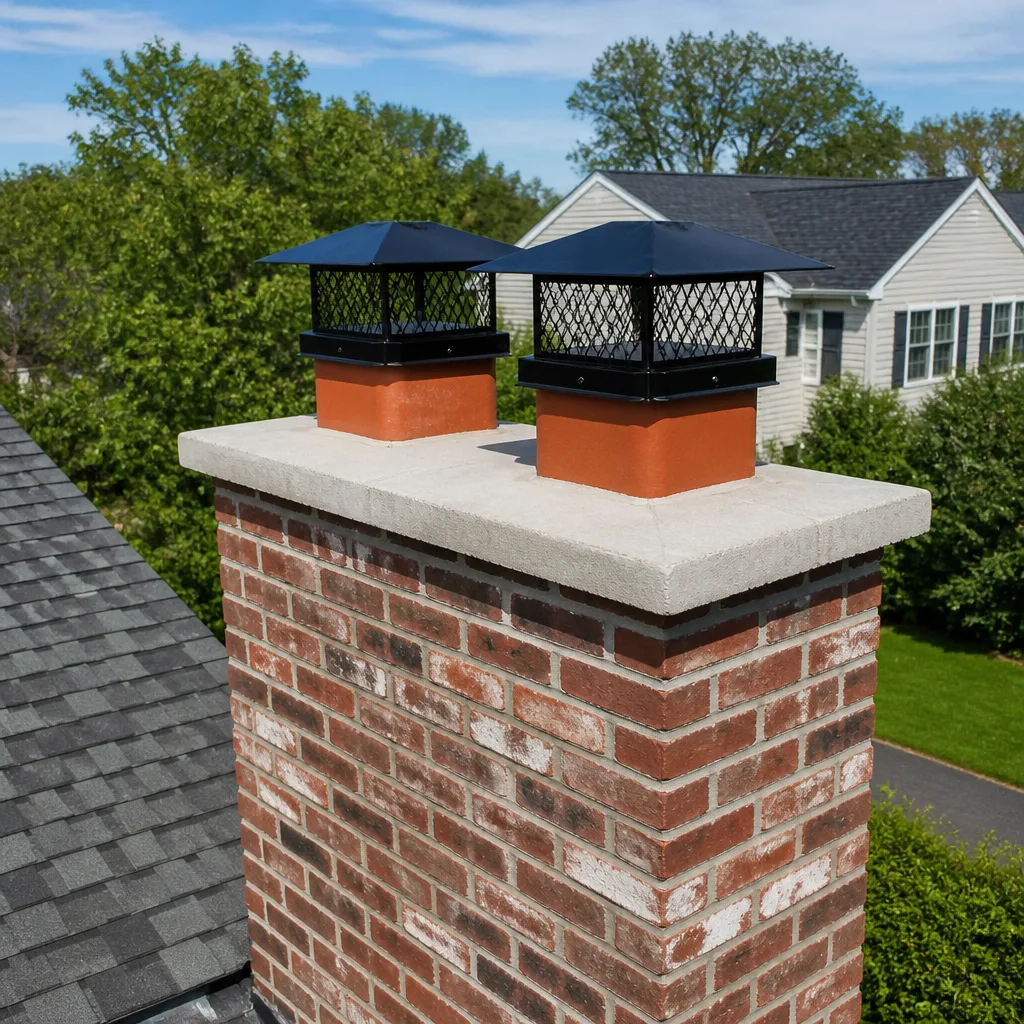 Caps & crowns
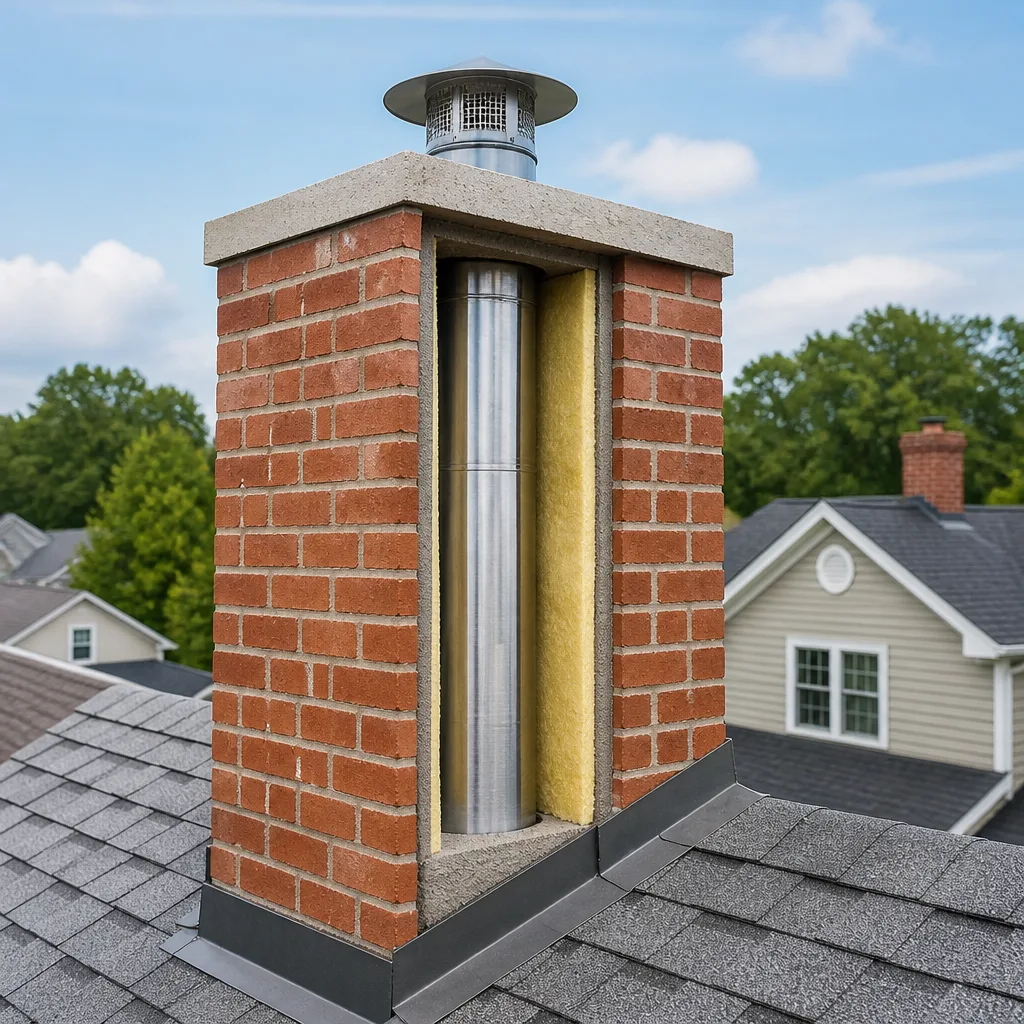 Flue relining
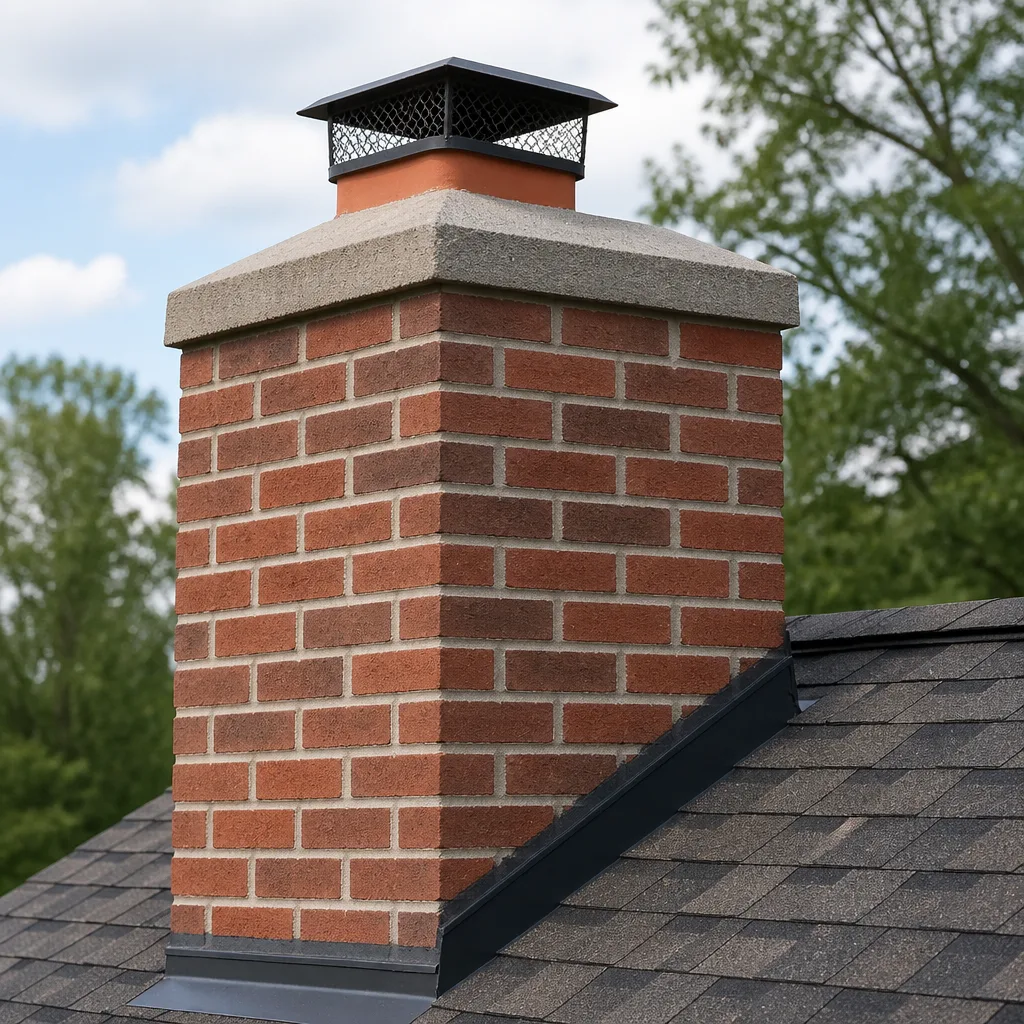 Masonry repair
 Gas fireplace service
Level 1 sweep and inspection to the NFPA 211 annual standard - flue, crown, cap, and flashing checked and photographed
Chimney sweep logs do not sweep chimneys. They loosen some creosote - which then falls where a brush and vacuum still have to collect it.
DIY vs Professional Chimney Cleaning: The Central Park Homeowner’s Decision Guide
You can buy the same polypropylene brush a sweep uses for under $80. That’s the honest part. The brush, though, is maybe 20% of what a professional cleaning actually involves, and it’s the other 80% – the camera pass, the creosote staging, the smoke chamber, the liner assessment – that finds problems before they become fires. We’ve pulled apart plenty of “DIY-clean” chimneys in Central Park and found glazed creosote sitting two feet above where the brush reached. This guide breaks down, component by component, what you can genuinely handle yourself and what needs equipment and trained eyes. You’ll leave knowing where the line actually sits.
Quick Answer
DIY chimney cleaning can safely handle light soot removal from the firebox, the damper area, and a roofline visual check of the cap. It cannot assess creosote stage beyond the visible opening, liner cracks, smoke chamber deterioration, or draft function – all of which require an inspection camera, staging reference, and trained interpretation. The honest answer for most Central Park homeowners is a hybrid: DIY firebox upkeep between seasons, plus one annual professional full-system inspection.
Styles & brands we work with
- Sweep & inspection
- Caps & crowns
- Flue relining
- Masonry repair
- Gas fireplace service
Table of Contents
- What DIY chimney cleaning can actually accomplish
- What DIY cannot assess – and why that gap matters
- The equipment gap, honestly explained
- Creosote stages and why they drive the decision
- Liability and insurance: the paper trail you don’t have
- The hybrid approach that works for most homeowners
- Safe DIY steps for between-season maintenance
- What a professional cleaning actually involves
What DIY chimney cleaning can actually accomplish
We want to be clear about this because too many guides pretend the answer is either “always hire” or “you’ve got this.” Neither is true. There’s a real, bounded set of tasks a careful homeowner can handle with basic tools, provided they understand the limits and the physical risks involved.
A typical DIY cleaning in Central Park – done in a single-story home with a straight flue and standard firebox – can reasonably cover these items:
- Light soot removal from the firebox walls and floor. A stiff brush and shop vacuum handle surface soot safely.
- Cleaning the visible damper area. You can reach the damper plate and the first foot or so of flue above it from the firebox.
- Roofline visual inspection of the cap and crown. From a stable ladder on level ground, you can see whether the cap is present, whether the crown is cracked, and whether animal screens are intact. Do this from the ground with binoculars if the roof pitch or height gives you any pause.
- Ash removal and grate cleanup. Straightforward, and worth doing before every burn season.
- Checking the damper opens and closes fully. A stuck damper is easy to spot and worth a call.
What ties these together is that they’re all visible tasks. If you can see it with a flashlight and reach it with a brush, you can clean it. If you can’t see it, you can’t clean it – and more importantly, you can’t assess it either.
The safety parameters matter. Never reach above the damper with a brush while standing on the hearth – the creosote up there is not something to disturb without knowing its stage. Never go onto a roof with a pitch steeper than you’d walk comfortably, and never go up in wet or icy conditions; Central Park winters make reroof work genuinely hazardous. And never use a wire brush on a stainless liner – it scratches and can compromise the surface. Poly brushes only.
What DIY cannot assess – and why that gap matters
Here’s the core argument of this guide: cleaning is partly DIY-possible, but inspection never is. Not because of a licensing rule – chimney inspection isn’t universally regulated at the consumer level – but because the diagnostic work requires tools and interpretation that no homeowner reasonably owns.
Four things sit permanently outside the DIY lane:
- Creosote stage beyond the visible flue opening. The difference between Stage 1 (sooty, brushable), Stage 2 (crumbly, needs a rotary tool), and Stage 3 (glazed, needs chemical treatment or liner replacement) is the single most important piece of information a chimney assessment produces. You cannot see it from the firebox. A brush either slides through or it doesn’t – and that’s not a diagnosis.
- Liner cracks and gaps. Stainless liners hide pinhole cracks and joint separations in places a flashlight won’t reach. Clay tile liners crack along mortar joints that only an inspection camera exposes. A crack in the liner is a direct path for carbon monoxide into the home’s living space. That’s the safety stake here, and it’s why the camera pass is not optional.
- Smoke chamber deterioration. The smoke chamber – the sloped area above the damper and below the flue – is where most “mystery” chimney problems start. Its parging cracks and spalls over time, turbulence builds, and draft degrades. You can’t see it from below, and you can’t reach it with a brush. Professional-grade materials like HeatShield exist specifically because smoke chamber resurfacing is a common, correctable repair – but it starts with someone documenting the deterioration first.
- Draft function under load. Draft can test fine with an empty firebox and fail under a real fire. Only a trained assessment with the right instrumentation identifies backdrafting, negative pressure problems, or a flue that’s undersized for the fireplace opening.
None of these are overhauls you can rule out yourself. That’s the point. Every one of them is invisible to a brush and a flashlight, and every one carries a real safety consequence. We inspect it, explain it, and fix it right the first time – and we document every inspection so you’re not taking anyone’s word for what was found.
The equipment gap, honestly explained
Homeowners ask us a fair question: “If the brush is $30, why does a professional cleaning cost what it costs?” The brush is one tool in a kit that runs several thousand dollars, and the brush is the cheap part.
Here’s what a professional Central Park sweep actually carries to a job, and what each piece does:
- Inspection camera. A chimney-specific camera on a flexible rod lets the technician see the full flue length, the smoke chamber, and the firebox flue collar. This is the tool that finds cracks, gaps, missing mortar, and creosote stage. A homeowner can’t cost-effectively own one for a once-a-year task.
- Rotary cleaning equipment. Powered rods and whip heads remove Stage 2 creosote that a hand brush won’t touch. Stage 3 glazed creosote needs chemical creosote remover or, in severe cases, liner replacement.
- Smoke shelf access tools. The smoke shelf is a horizontal ledge behind the damper that collects soot and debris. It’s cleaned with a rod and brush combo from above or below the damper, and it’s the single most under-cleaned part of most chimneys. Skip it and you leave a reservoir of soot sitting in the middle of your system.
- Staging reference and documentation gear. Creosote staging isn’t guesswork, but it requires training and a photo record. A documented inspection produces a report – which matters for insurance and for future repair decisions.
The equipment math is simple: a homeowner spends a few hundred dollars on equipment that gets used once or twice and then sits, versus a professional who uses it daily with trained hands. And even if you bought the camera, the diagnostic part – correctly interpreting what you see – is not something a homeowner should have to develop competence in for a once-a-year task.
We source materials through recognized lines like DuraFlex for liner replacement and Copperfield or Famco for caps and crowns, which means when a legitimate repair is identified, it’s specified with components built for the job, not improvised hardware. That’s not the sweeper’s job to figure out on every call – it’s already in the toolkit.
Creosote stages and why they drive the decision
If you remember one thing about chimney safety, make it this: creosote is the fuel, and its stage is the risk. Every wood-burning chimney in Central Park produces creosote – it’s an unavoidable byproduct of combustion. What varies is how much, and in what form.
The three stages, and where each lands on the DIY-versus-professional line:
- Stage 1: Sooty, flaky, brushable. This is the light residue a homeowner can remove with a poly brush, and honestly the only stage that DIY cleaning legitimately handles. It forms after proper burns with dry, seasoned wood and reasonable flue temperatures.
- Stage 2: Crumbly, granular, and sticky. This is where DIY stops being safe. Stage 2 creosote clings to the flue walls and won’t brush off – it needs a rotary whip head and powered rods. More importantly, Stage 2 is an indication that flue temperatures and wood conditions are off somewhere. That’s information a homeowner should act on with a trained assessment, not just brushing.
- Stage 3: Glazed, hardened, and the highest fire risk. Glazed creosote looks like a shiny black varnish inside the flue. It ignites at lower temperatures than the other stages, and it cannot be removed with a brush at all. Sometimes chemical treatment works; often the liner has to be replaced. The presence of Stage 3 in a Central Park chimney is a documented finding, and the correct response is a professional assessment – not a second pass with a stiffer brush.
Central Park’s high-altitude climate (roughly 6,600 feet) matters here. Wood burns differently at altitude, and fireplaces that are undersized or operated with the damper too closed produce cooler flue gas and more rapid creosote accumulation. This is an altitude effect, not a coastal or salt-air one – the thin, dry air just changes the combustion math. That’s one reason we strongly recommend a professional assessment once a season in this region rather than every other year, which some flatland-homeowner advice assumes.
The practical takeaway: if your firebox is clear and your visible flue wall is clean, DIY has done its job. But you cannot tell Stage 1 from Stage 3 by looking up from the hearth. That’s the diagnostic line, and it’s why the annual professional assessment stays in the plan.
Liability and insurance: the paper trail you don’t have
We’ve watched homeowners get surprised at claim time, and it’s worth stating plainly: if a chimney fire happens and there’s no documented inspection history, the burden is on you to show the system was maintained. In practice, that’s very hard to demonstrate with a brush in the garage.
Insurance carriers vary, but most homeowners policies treat chimney fire claims differently when maintenance history exists versus when it doesn’t. A documented professional inspection – with a report showing what was found, what was cleaned, and what was recommended – establishes that you took reasonable steps to maintain the system. A DIY cleaning leaves no such record.
This isn’t a scare tactic; it’s the practical math of claims adjustment. If your carrier asks for documentation and you have none, the claim is disputed. If you have a dated report from an inspection, the claim moves forward. Since most standard homeowners policies require you to demonstrate reasonable maintenance, the report itself becomes the proof.
Beyond insurance, documentation matters for the next transaction too. When you sell a Central Park home, buyers and their inspectors ask for chimney records. A stack of annual inspection reports is worth more at closing than any verbal account of careful maintenance. Ask us what we found – we document every inspection, and that record belongs to you.
The hybrid approach that works for most homeowners
Here’s what we actually recommend for most Central Park homeowners: a hybrid boundary that gives DIY the between-season maintenance and gives a professional the once-a-year assessment. It’s not a compromise – it’s an accurate division of what each party can genuinely do well.
The split, by task:
- You handle: firebox soot removal, ash cleanout, visible damper area cleaning, and a ground-level visual check of the cap and crown. These are the between-season upkeep tasks, done once in spring when the firebox is cool and dry.
- A professional handles: the full-flue camera assessment, creosote staging, smoke chamber and smoke shelf inspection, liner integrity check, draft testing, and any repair specification. This is the annual full-system inspection.
- Together you decide: whether the system needs sweeping this year, whether repair is required, and whether any work can safely wait until a less urgent time.
The reason the hybrid sits well with Central Park homeowners is that it respects both realities: nobody wants to pay for a full sweep when the firebox just needs a light cleanout, and nobody wants to skip a genuine safety assessment because the firebox looked fine. The professional inspection is where the real safety value lives; the DIY firebox work is real maintenance you’re capable of. Doing both is the sensible arrangement.
One practical note for property managers: our team can structure this as a documented annual service for individual units, with reports filed per unit. That’s the arrangement most rental and HOA managers settle into after the first inspection, and it removes the guesswork about which buildings have been properly maintained.
Safe DIY steps for between-season maintenance
If you’re going to do the firebox portion yourself, here are the steps we’d walk through for a safe cleanup. Work in the off-season, never while the firebox is warm, and stop and call a professional if any step reveals something unexpected.
- Confirm the system is fully cool. No warm ash, no glowing coals, no residual heat in the grate. Twenty-four hours of idle time minimum.
- Lay protective covering. Drop cloth or a plastic tarp over the hearth and the surrounding floor, plus a mask and gloves – soot gets everywhere.
- Remove the grate, andirons, and screen. Ash cleanout into a metal container, sealed and moved outside. Never leave ash indoors overnight.
- Brush the firebox walls and floor with a poly or stiff-bristle brush. Vacuum with a shop vac fitted with a fine-particle filter. The visible damper plate can be wiped and brushed.
- Do the visible-flue check with a flashlight. Look up past the damper. If you see shiny black varnish, crumbling sticky residue, or missing tile joints, stop – that’s a professional call.
- Do a ground-level cap and crown check. Use binoculars. Note a missing cap, cracked crown, or damaged animal screen. Any of those is a call to a professional, and our chimney cap & crown work is the reason those calls get answered properly.
- Note anything unusual. Smoke stains around the firebox, water streaks, white efflorescence on the exterior masonry. Write it down and mention it at your next inspection – these are early warning signs, and a trained eye will know what they mean.
Stop entirely if you feel any hesitation about reaching above the damper or going onto a roof. The most common DIY chimney injury isn’t creosote-related at all – it’s a fall from a ladder or a roof. There’s no maintenance task on this list worth that risk.
What a professional cleaning actually involves
To demystify what you’re paying for when you book a professional chimney sweep, here’s what happens on a standard Central Park call. It’s more than the brush, and it’s more than a five-minute pass.
- System walk-through with the homeowner. We ask about burn habits, wood seasoning, and any symptoms – smoking, smell, poor draft. The report starts here.
- Firebox and damper cleaning. Soot removal, grate cleanup, and the visible damper area – the same work a homeowner can do, but done with the sweep’s equipment and dust containment.
- Smoke chamber and smoke shelf cleaning. Rod and brush access past the damper. This is the part most helpful DIY guides skip entirely, and it’s where soot reservoirs hide.
- Full-flue camera pass and creosote staging. The inspection camera runs the full flue length. Creosote is identified by stage, and any liner cracks or joint separations are photographed and noted.
- Liner and smoke chamber integrity check. Stainless and clay liners are assessed for gaps and cracks. Smoke chamber parging is evaluated – a deteriorated chamber is the reason HeatShield ceramic resurfacing exists as a professional-grade repair.
- Exterior check: cap, crown, flashing, masonry. A missing or damaged cap lets water and animals in. A cracked crown lets water into the masonry. Both are specifiable repairs with purpose-built components – Copperfield and Famco caps, crown materials built for the job.
- Draft assessment under load. Draft is tested under realistic conditions, not just an empty firebox.
- Documented report. You get the findings, the photos, and any recommended repair work in writing. This is the paper trail the insurance section is about.
If a liner is damaged or the flue is unlined, our DuraFlex capability means we can address that directly – not refer it out. Full-system coverage from firebox floor to chimney cap means you’re not coordinating between a sweep and a repair contractor.
Common Mistakes to Avoid
- Believing the brush is the whole job. The brush handles Stage 1 creosote and the visible firebox. Everything above that – smoke shelf, camera pass, staging, liner check – is the work the brush can’t do, and skipping it is the reason “I clean my own chimney” homeowners still have chimney fires.
- Cleaning but never inspecting. Cleaning removes what you can see. Inspection finds what you can’t. These are two different services with two different purposes, and the second is the one that protects the household.
- Going onto the roof in Central Park winter conditions. Wet, icy, or snow-dusted shingles are a different category of hazard than a dry summer roof. A ground-level visual check with binoculars gets you most of the information; a fall doesn’t.
- Using a wire brush on a stainless liner. Wire brushes score the liner surface and can create points where corrosion begins. Poly brushes only for the flue, and only up to the damper for DIY.
- Assuming a low-fire is a safe fire. Cool, smoldering fires actually produce more creosote than hot burns. If you’re banking the fire overnight with the damper nearly closed, you’re building the creosote problem faster, not slower.
- Skipping the inspection because the firebox looks clean. A clean firebox tells you nothing about the flue above the damper. That’s the whole point of the diagnostic boundary.
- Buying equipment you’ll use once. Camera, powered rods, whip heads, staging references. It’s a professional kit for a professional job. The honest DIY lane is the firebox and the ground-level check, not the flue.
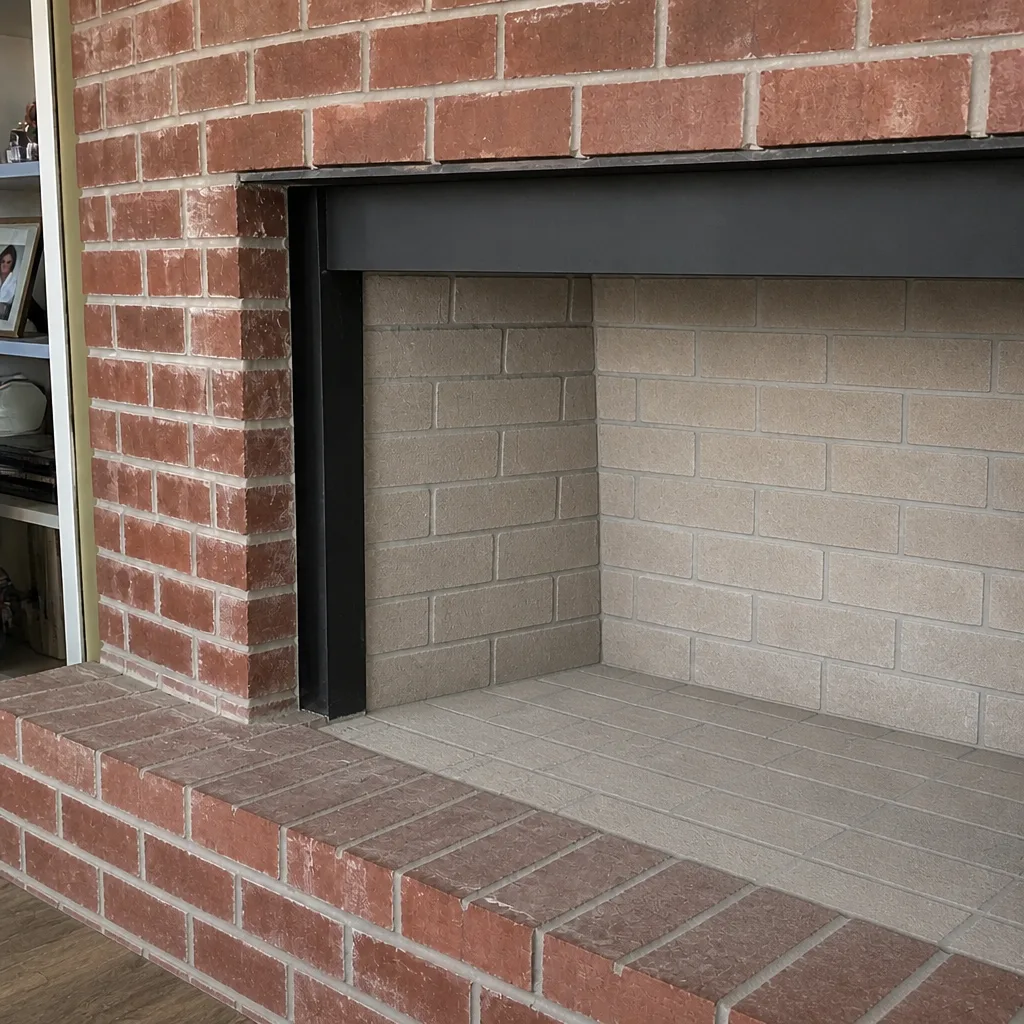
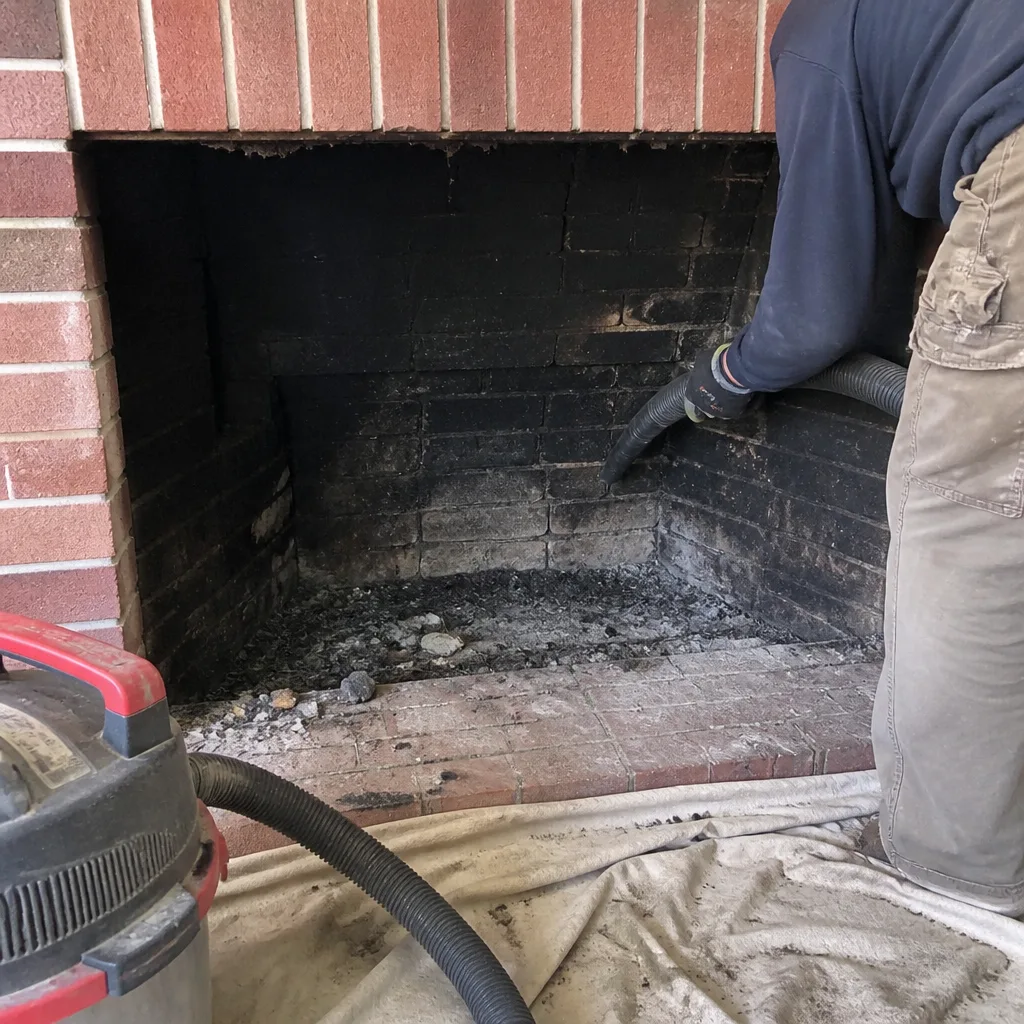
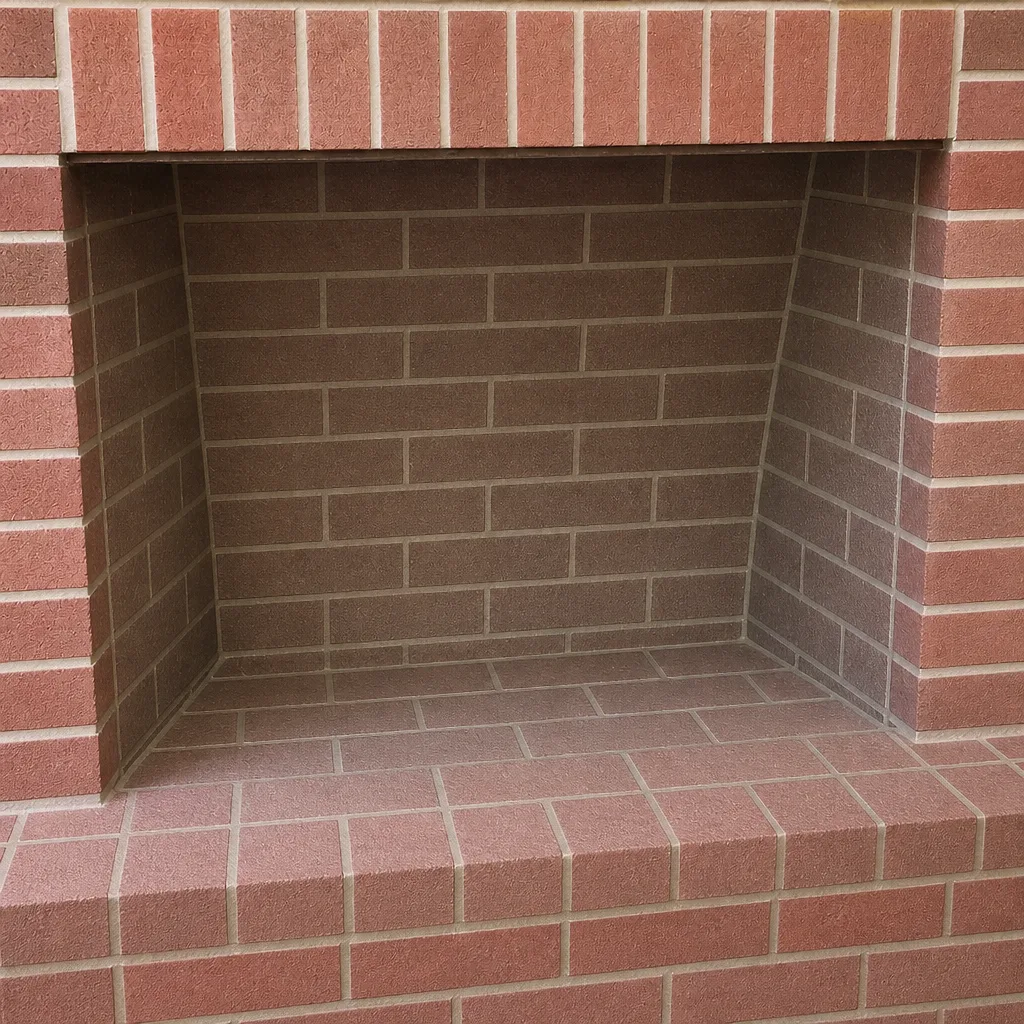
See the difference
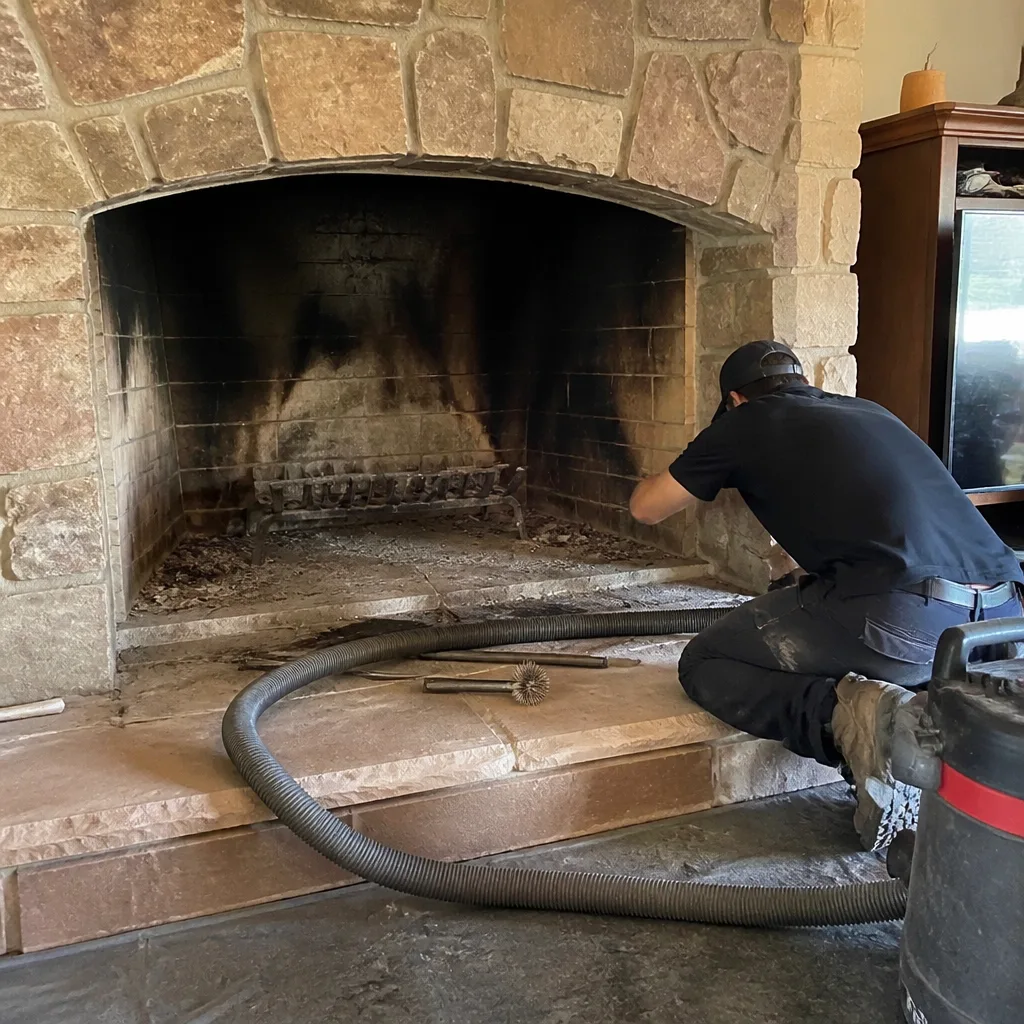 Before
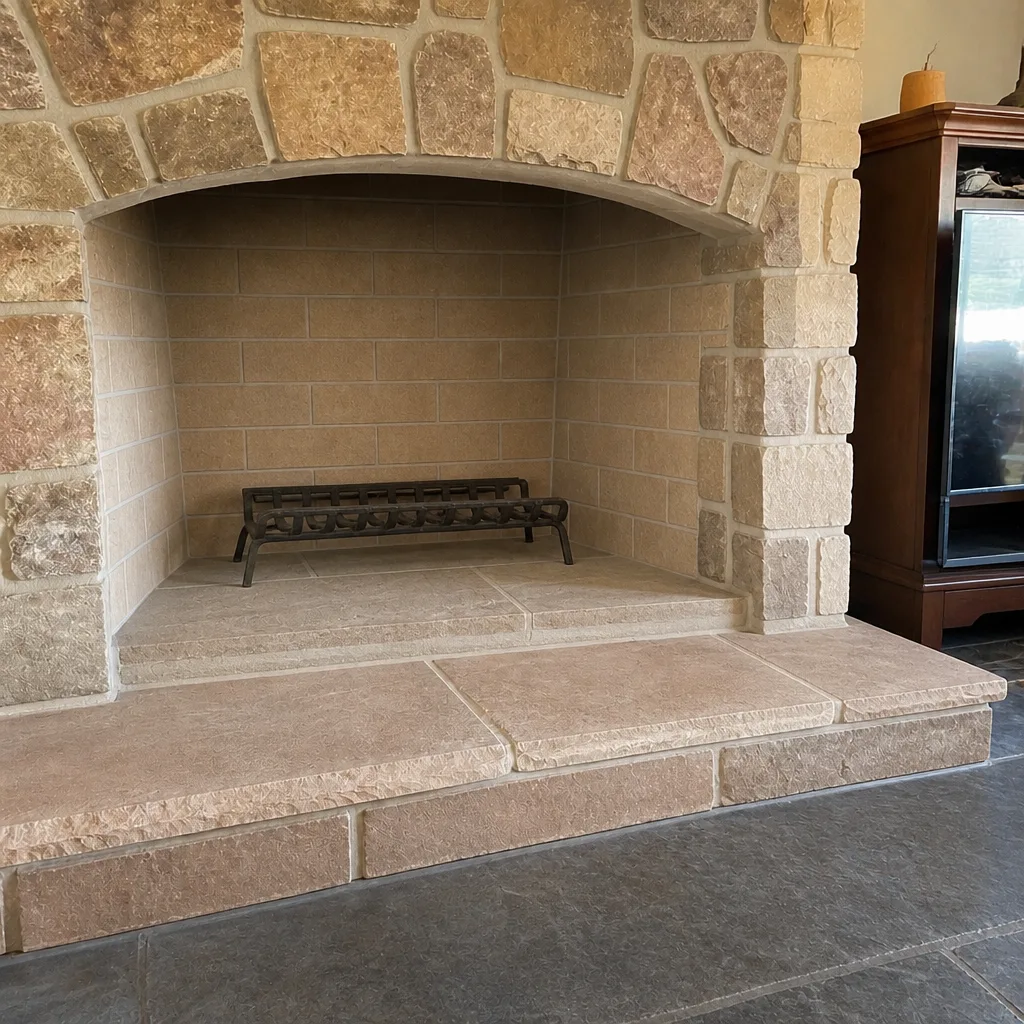 After
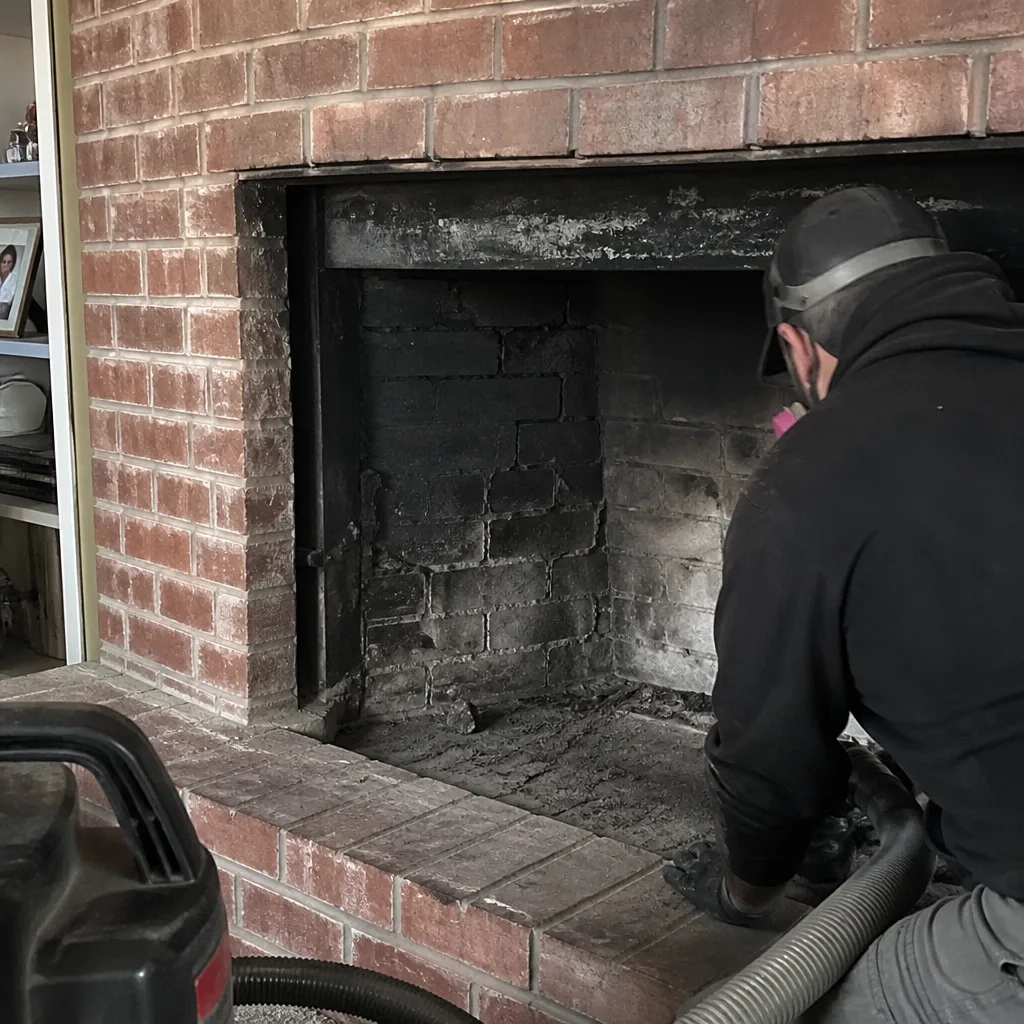 Before
 After
 Before
 After
When to Call a Professional
Call us when any of the following is true: you see shiny black glazed creosote above the damper; you smell smoke indoors when the fire is running; the firebox has water staining, efflorescence, or rust; the fireplace smokes back into the room; you notice a cracked or missing chimney cap; the exterior masonry shows cracks or spalling; or you simply haven’t had a documented inspection in the last year. Any of these means the diagnostic boundary has been crossed. If you’re in Central Park and want a straight answer about what your chimney needs, call (855) 550-7509 for a free estimate. We answer 24/7, with fast dispatch from 7am to 7pm, Sunday through Friday.
If your fireplace itself is showing problems – damper sticking, firebox cracks, grate issues – our fireplace repair team handles that component directly. And if you’re new to the area or just want a baseline, start with our main Chimney Sweep Central Park page to see the full-service scope. You can also see how we handle the same conversation for nearby mountain and foothill communities through our regional sweep service, which follows the same inspection standards. If you’ve been running a wood stove or open fireplace in the Front Range climate, our Front Range assessment guide covers altitude-specific creosote behavior and what to watch for. And if you’re a property manager responsible for multiple units, our multi-unit inspection planning guide walks through how to structure annual documentation.
Frequently Asked Questions
You can safely clean the firebox, the visible damper area, and check the cap from the ground – but you cannot safely or accurately assess the flue above the damper, and that’s where the important findings live. DIY cleaning is partial by design, not by accident.
A typical professional sweep with inspection in the Central Park area runs in the range that reflects a full-system assessment plus cleaning, and we set the actual price per job by written estimate after seeing your system. Call (855) 550-7509 for a free estimate; the written estimate sets the final price.
Stage 3 glazed creosote looks like shiny black varnish inside the flue, and it can only be confirmed with an inspection camera because it forms above the firebox. If you see it from below, it’s already a professional call; if you don’t see it from below, it may still be up there. That’s the diagnostic boundary in one sentence.
A DIY cleaning with no documented inspection leaves no paper trail, and most carriers want evidence of maintenance when a chimney fire claim is filed. A dated professional inspection report is the documentation that matters at claim time. Calling (855) 550-7509 for an inspection is how most Central Park homeowners establish that record.
Once a year is the working baseline for most households, and Central Park’s high-altitude burn behavior – where cooler, slower fires build creosote faster than at lower elevations – makes the annual inspection the right cadence here. The yearly cadence is preventive; if the firebox or hearth has shown problems, the call should be sooner. Call (855) 550-7509 to get on the annual inspection schedule.
Nothing visible, for a while – which is the problem. Creosote accumulates in stages, liner cracks develop without symptom, and the first sign of a failed assessment is often a chimney fire or a carbon monoxide reading. A cleaner is not a problem detector, and the professional inspection is the problem detector. That’s why we recommend the hybrid: DIY firebox upkeep, annual professional assessment. Call (855) 550-7509 to book yours; estimates are free.
The Bottom Line
The honest split is this: a homeowner can handle light soot removal from the firebox, visible damper cleaning, and a ground-level cap check – genuinely, safely, with basic tools. A professional handles the camera assessment, creosote staging, smoke chamber and smoke shelf cleaning, liner integrity, draft testing, and the documented report. Neither half of that split is optional, and the annual inspection is the piece that actually protects the household. If you’re in Central Park and want to know exactly where your system stands, call us at (855) 550-7509. We answer 24/7, with fast dispatch from 7am to 7pm, Sunday through Friday. The estimate is free, the report is in writing, and the findings are yours to see – ask us what we found.
Our technicians have up to 15 years of experience, and from the firebox floor to the chimney cap, we handle the whole system: sweeping, inspection, fireplace repair, chimney repair, and cap and crown installation with professional-grade materials from DuraFlex, HeatShield, Copperfield, and Famco. A clean chimney is the starting point. A safe, structurally sound chimney is the goal.
Written by the team at Chimney Sweep Central Park.